Thursday, March 3, 2011

Hindi word of the day: पर्यटक (paryathak - tourist)

Over the past several days, the New York Times op-ed Kennedy Odede ’12 wrote last summer about slum tourism has been repeatedly cycling through my mind (and my conversations with friends, because apparently I am a walking, talking advertisement for Wesleyan). That’s because yesterday, the Alliance took us to see Dharavi, the largest slum in Asia, as part of our five-day visit to Mumbai.


Odede’s horrifying description of a white woman photographing a man defecating was emblazoned in my memory vividly enough to prevent me from taking my camera out of my bag (which is why there are no photos to accompany this post), but that didn’t mean I felt like any less of a tourist. I’m not sure what I was expecting our visit to Dharavi to be like, but I was completely unprepared for what we experienced. Our two shiny yellow buses honked their way through the narrow streets of the slum and pulled over to let us out. We descended the stairs and were quickly whisked away into one of the nagars, or neighborhoods, of Dharavi. The program directors, encouraging us to take photos, hurried us through alleys as the residents of the nagar stared at us from their doorways. I pulled my hands to my chest and said ‘namaskar’ to each person I passed, as if with this simple greeting I could apologize for intruding in their home, for treating their life as if it were a spectacle, for being the very tourist I had hoped not to be.

Just as quickly as we had entered the nagar, we were shuffled back onto the bus. In the tribal villages we visited a few weeks ago, we had been encouraged to explore the alleyways and talk to the residents, accompanied by a Marathi translator. We spoke to people who had lived and worked in the village for decades and played games with the children who giggled as they followed us around. But in Dharavi, we were given no opportunity to interact—we were only able to observe, as if that would allow us to experience life in a slum.

We got off the bus again and were marched off to a recycling plant in the middle of Dharavi, to see one of the slum’s main industries. I again offered my ‘namaskar’s to the people I passed but I was often met with glaring silence. My friend Christie started to cry. She embarrassedly tried to wipe away her tears, but everyone felt the same way. Cameras had been put back in bags, curious smiles had turned to shame, and we whispered our mortification to one another as we glanced around us at the laborers cleaning oil barrels and cutting up old shoes: “This feels so wrong.”

As we sat on the bus, being driven to our final stop on the tour, I talked to Christie.

“I just thought coming with an academic group would be different,” she said. “I thought it wouldn’t just be a tour of a slum. I don’t know what else it could have been, but I just thought it would be different.”

I felt the same way—if we were there to learn, to understand India’s development, how could we just trek through and leave? Is simply seeing ever enough to understand?

Our final stop was at an NGO started by a Dharavi resident. He was a retired teacher who had decided to take the slum’s pitiable education system into his own hands and started a school. He spoke to us about the way the government ought to develop Dharavi, the way it ought to repair the country’s education system, and how it was failing at both. Someone asked him the question that had been weighing on all our minds: What did he think when groups of American students came to see the slum? He loved it, he said, because change is in our hands.

As we left Dharavi in our fancy tour bus, we talked about what he meant. What can we, as privileged white kids who have never experienced anything remotely similar to living in a slum, possibly do to help? How can we turn this experience that left us all feeling guilty and hollow into something beneficial? By learning, my friend Kelsey suggested. Of course we, as upper-middle class American college students, are in a position of power, she said. Of course it was wrong to treat a slum as a form of entertainment. But we can take away from this the motivation to use our privilege well—to know the communities we strive to help, to listen, to truly care. We can learn not to be what we were in the eyes of the Dharavi residents.

And who knows, maybe that’s not enough. Certainly, it doesn’t make up for the knot I get in my stomach thinking about trudging through the nagar. But for now, this is all I can take away from Dharavi: the desire, both literally and figuratively, to never be a slum tourist again.

Tuesday, March 1, 2011

Hindi word of the day: सुख (kush - happiness)

This weekend, our Environmental Perspectives teacher took our class on an amazing trip to Mahabaleshwar, a hill station about two hours outside of Pune. We spent our two days hiking, eating amazing food (thali, strawberries, chai), and napping. It was one of the most relaxing, rejuvenating experiences I've had in India, although it made starting classes again on Monday really rough. Luckily, we only had two days of school this week because we leave for Mumbai tomorrow morning!
On our hike to Wilson's Point, we passed multiple sheep herders. They travel hundreds of miles throughout the year. They were currently on their way back to a small town near Mahabaleshwar where they spend a few months in between nomad-ing. 
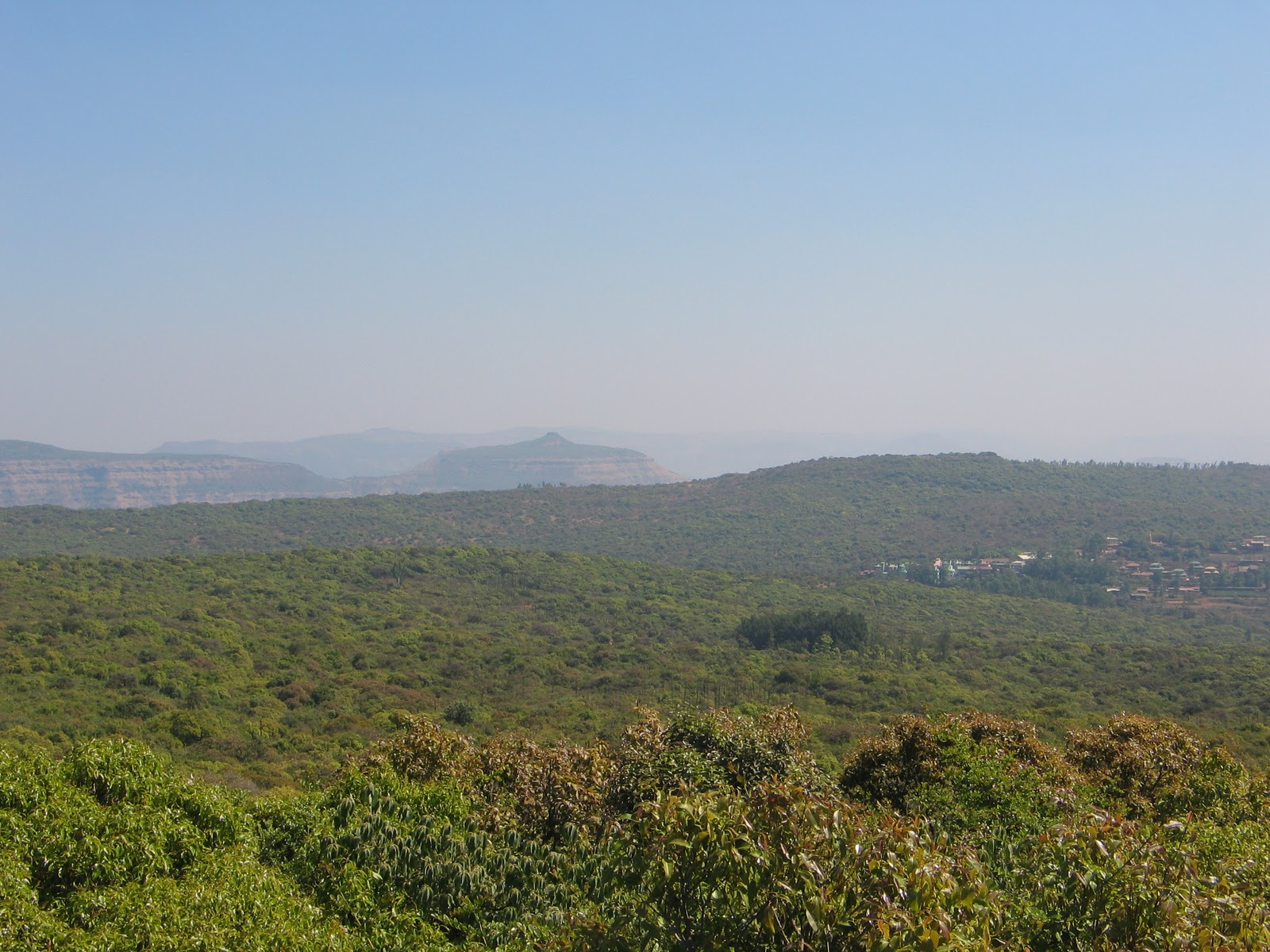
The view from Wilson's Point.

After our first hike, we stopped for lunch and dessert--delicious strawberries and cream. Abhishek lusts after Anuja's remaining berries.

Mahabaleshwar is famous for its strawberries. I think I ate two full boxes of them this weekend + two glasses of strawberries and cream.

The restaurant where we ate had photos of famous people who'd eaten there hanging from the roof. Apparently foreigners are equivalent to Bollywood stars in fame level, which explains why we always get asked to have our photos taken.

After lunch, we took a nap at the hotel we were staying at and then headed to go on another hike to a bat cave. We passed this amazing viewpoint on the way.

Trekkin'

The field we ended up in before reaching the bat cave was spectacularly beautiful. It was a wide, open plain surrounded by lush green jungle.

I couldn't decide which photo I liked more so I posted them both.

After the hike, we walked back through the village at the trailhead. It's a tiny Muslim village with about twenty houses in total. This family of farmers said that there were twenty family members living in their house.

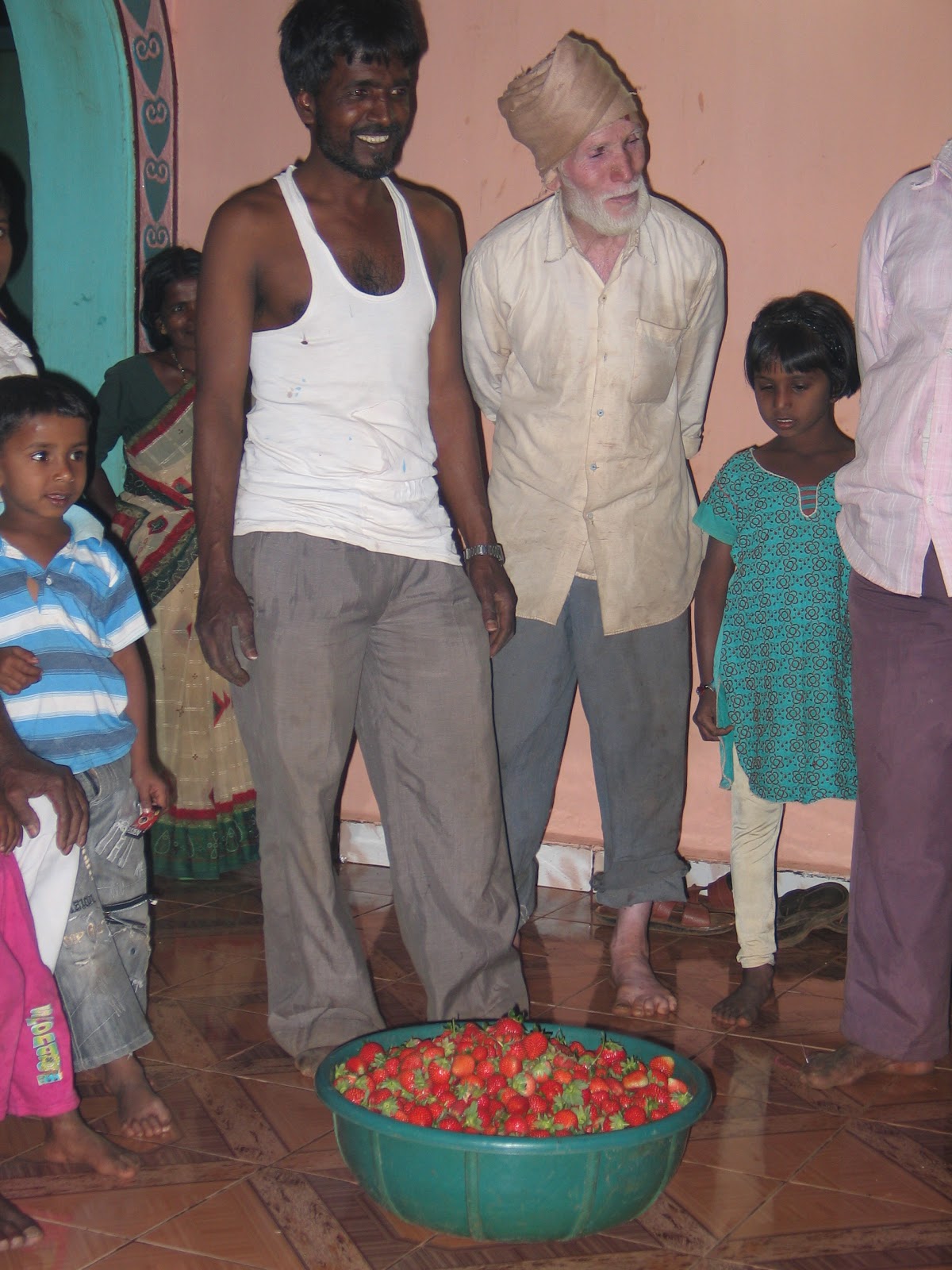
They sold us delicious strawberries (we took this entire bucket). Another family in the village fed all twenty of us dinner, which was just as delicious as the strawberries were, as we squeezed into their living room.

The view from our hotel.

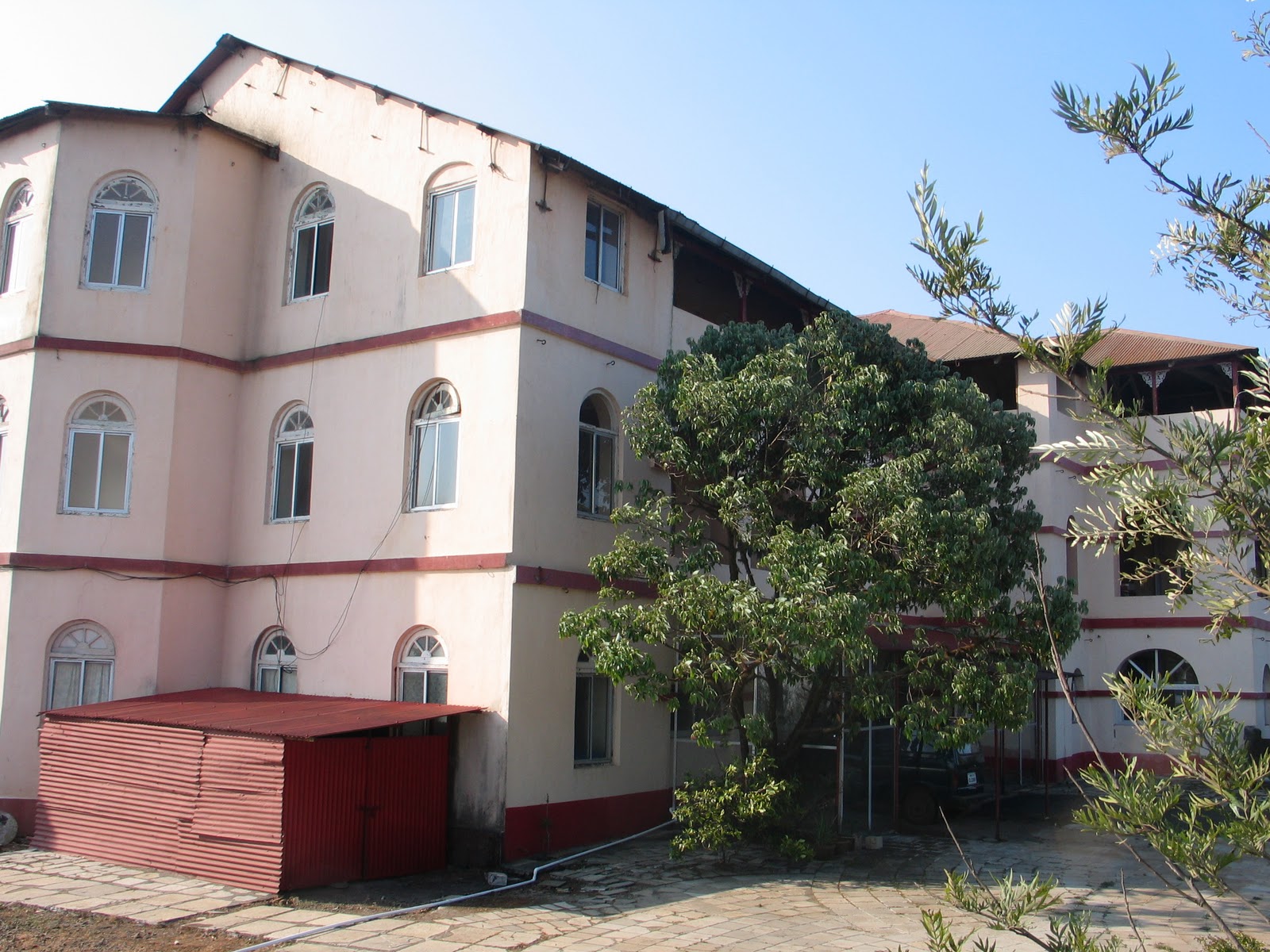
Our castle-like hotel, which had the most amazing view of the sun rising over the lake the next morning.

On Sunday we trekked to a temple which was currently being excavated. Professor Paranjpe noticed that they were removing trees unnecessarily and stopped in the middle of a lecture to have the men doing the excavation work call their boss. He spent about fifteen minutes telling him that if they didn't stop, he would pursue environmental litigation against them. So entertaining.

The view of a valley reservoir from the temple.

The temple. A natural spring behind it feeds water into the cow sculpture which channels it into the water tank at the bottom.


Preston and Preston-in-training (aka Abhishek).

Our final hike was to a beautiful (and uber-touristy) viewpoint called Arthur's Seat. It was so green and lush--I can't even imagine what it looks like during monsoon season.


Jen chilling with a monkey at Arthur's Seat.

Zach and Josh nomming on some roasted corn at the top of the trail to Arthur's Seat.

We stopped at a rest stop on the way out to buy some strawberries. Stefan used this time to kick a bunch of kids off a trampoline and do some backflips.

Monday, February 28, 2011

Hindi word of the day: शादी (shaadi - wedding)

I think this post deserves some extra large pitchas, so get ready. 

Last week Pooja took me to her family friend's wedding, which was spectacular in every way. It was a three-day event (I went to two of the days since the second day is supposed to be boring and Pooja didn't want to go), which is fairly common for weddings in Maharashtra. Weddings vary hugely by state; some are over a week long, some are just a day, all have their own traditions and ceremonies. This one included a mehndi ceremony on Wednesday night, some kind of puja on Thursday, and the actual ceremony on Friday afternoon, although apparently the bride, Sonia, also had a bachelorette party and they were having a reception in Mumbai that weekend with all of the groom's friends (he's from Mumbai and they're moving there). 

The wedding was pretty much the most amazing thing ever. I was obviously freaking out the entire time and Pooja kept getting telling me to calm down. I was surprised to learn that the marriage was arranged. Vikram and Sonia had been dating for a year but it had been set up by their parents with the intention of getting married. During the mehndi ceremony, Sonia's aunt gave a tear-filled speech about letting Sonia go. She said she wouldn't be willing to give her up to anyone other than Vikram and his family, and told us an adorable anecdote about the beginning of their relationship: "Sonia said to me, 'I love Vikram and I haven't even met him yet.'" Maybe it's just me and my silly romanticizing of arranged marriage, but I thought that was adorable.

Anyway, I don't have much else to say, so here are some photos.

The five-star hotel where the mehndi ceremony was thrown.

Naman's mom, Pooja, and me. I was a bit underdressed.

Sonia, the bride. Her henna was spectacular; the groom's name (Vikram) is hidden somewhere in its elaborate design.

Pooja gettin' bangled. They gave away free bangles to all the guests.

Prithi kaku getting mehndi.

The man who hennaed my hands was an incredible artist and was very passionate about his work. He said he'd been doing it since he was fourteen.

Pooja is a weirdo and thinks henna is gross.

For the first part of the party they had a live band and singers. The best part was listening to Prithi sing along to some classic Bollywood songs.

The ballroom rented for the occasion. There were probably about 500 people in attendance, which is a HUGE amount. Mehndi ceremonies were traditionally only for the bride's closest friends and family--and was only for women.

All the couple's friends and family choreographed dances for them  and performed them onstage. Sonia and Vikram joined them for a few--they're the ones dancing in the middle.

Pooja, Naman, and their dads, who have been best friends since college.


Naman's mom helped me get ready for the wedding Friday morning--she wrapped me in my sari, gave me a bindi to wear, and combed my hair into a barrette. We totally bonded and she promised to teach me to make pani puri. I'm stoked. 
Prithi, Ramesh, and Nitin.

Sonia behind the veil of flowers (Vikram is on the other side). Once they pull it down, the bride and groom mount their friends shoulders and try to put a garland over each other's heads as their friends make it difficult by shaking and tipping them.

The new couple!

Decorations in the hotel for the celebration.

Me, Naman, and Pooja. Pooja refuses to wear a sari because she thinks they're uncomfortable, so she wore a fancy salwar kameez. Naman was very proud of his outfit--apparently it's made of a very expensive silk that is traditionally worn by royalty.

The couple receives blessings from their guests and poses for photos. Pooja made me and Naman accompany her to do this.
Vikram and Sonia.

Delicious little treats they gave out in addition to the massive loads of food they served.

Thursday, February 24, 2011

Hindi word of the day: गुफा (gupha - cave)

Heyo. This past weekend, I visited some of India's biggest tourist attractions, the Ajanta and Ellora caves. They were amazing, but I don't feel like writing all that much and don't really have any interesting musings, so I'll just upload a bunch of photos and caption them all.

We left Pune at 5 p.m. and got to Aurangabad, the nearest hotel-filled town to the caves, at around midnight. Our driver, Suresh, then for some reason ended up following a crazy rickshaw driver from hotel to hotel around the city unsuccessfully looking for a place for us to stay. Eventually Josh and I just got out of the car and found a hotel. It wasn't the cheapest (not cheap being about 14 bucks for a room in India), but it was pretty nice. That is, until we got into the bedroom. The bed in mine looked great until we pulled back the covers and discovered that they had used one sheet to cover two mattresses--but only over the top, to make it look legit when you walked into the room. Good times.

Suresh took us to this chai place the next morning on our drive to Ajanta. There are places like this all along the roads and they make fantastic tea.
After tea, Suresh stopped at another little dukan for breakfast, which was one of the most delicious things I've ever eaten in my entire life. Yummy potato vada, little fried bhajjia, and jalebi. Nom nom nom--Zach, Stefan, and Amy try their first jalebi.

Suresh dancing along to the Bollywood music he blasted for the entire drive (which was amazing and I obviously loved). He was fantastic and just an incredibly nice person. I hope we have another chance to hire him again.
The caves at Ajanta were amazing--there were 30  caves all lining this beautiful valley carved out of the stone centuries ago as Buddhist temples and meditation spaces.
The cave at Ajanta with the most well-preserved paintings. It was built in the sixth or seventh century.
The best photo I could get of the paintings without using a flash.


You can pay 600 rupees to get carried on one of these rather than hiking because obviously the hiking part is not an important part of the experience.

I loved this cave--it's a beautiful temple lined with incredible carvings.

Zach in front of a giant sleeping Buddha in my favorite cave.
The sunset on the drive leaving Ajanta.

Our next hotel--the most ghetto room I've ever stayed in, but definitely cheaper than the first hotel. And all the beds had sheets on them! (Although there was also some stuff on the sheets that we chose not to pay attention to.)

The next day we went to Ellora, which blew my mind. The carvings in the first few caves were absolutely incredible.

The flower on the ceiling is apparently a lotus, but I think it looks like a sunflower.

Stefan and I checked out an area that was technically closed to entry. Before we got kicked out by a guy who was sweeping out the caves (Zach says it was to clean up bat guano), I got a shot of the amazing painting on the ceiling.

We are tourists.


Suresh paid one of the photographers who stand around to take photos of us as a group for him to keep. We then proceeded to take photos of his photos because they are adorable.

Me and Suresh--he specially requested this photo.

Family photo.


The last temple at Ellora was by far the most spectacular. Multiple stories, incredibly intricate details, and amazing carvings of animals and "amorous couples" (think Kama Sutra), it took TEN GENERATIONS to complete. 

Amazing.


Monkeys outside Ellora.

WINDMILL FARM on the drive back to Pune.


Pollution makes for such beautiful sunsets.

Men making garlands to sell for pooja near one of the places we stopped for chai on the drive home.